city-of-tomorrow
When I first visited Disney World with my family as a child, I was captivated by the monorails. I had never seen anything like it. A highway in the sky that could take me pretty much anywhere in the parks. I didn’t need a car, I didn’t need a license, I didn’t need mom or dad to bring me, and I didn’t need to ride my bike on the shoulder of a highway. All I had to do was walk to a nearby station and get on the monorail. For a boy from south Louisiana, it was my first experience with a well thought out public transit system, and I loved it. It was freedom.
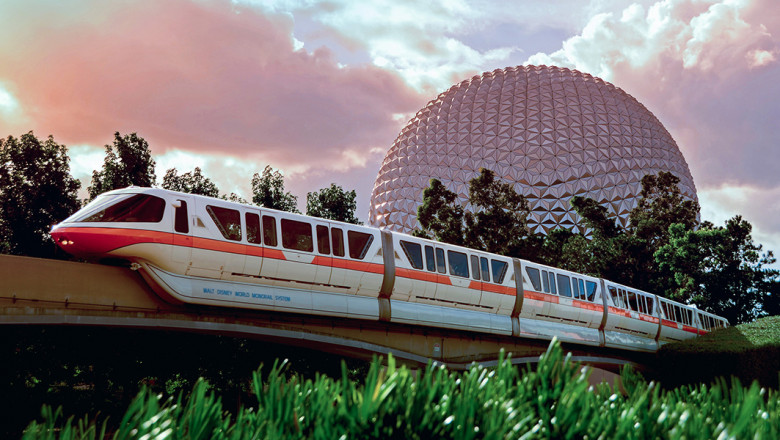
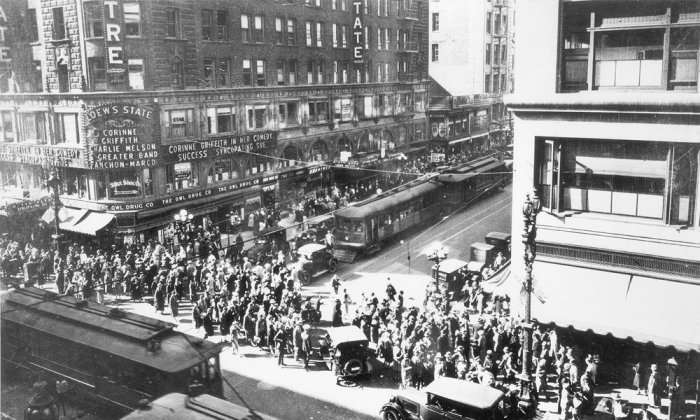
It made me think about my grandmother, who lived in New Orleans at the time, and how we once took the streetcar, something that you did because it was a novel thing to do and not for practical reasons. A crumbling piece of history. She’d tell me stories of her as a teenager taking the streetcars around the city with her friends. It made me angry, since from my perspective I was under house arrest as a kid without a car. The monorail and walkability of Disney’s parks are one small piece that makes Disney a magical place. Walt Disney had an even grander vision for EPCOT, a vision he never was able to fully realize after his death in 1966. A larger transit system was planned, built for people, not cars. Cars would be used for longer, extended trips, and roads in the city would be underground, leaving the surface for people.
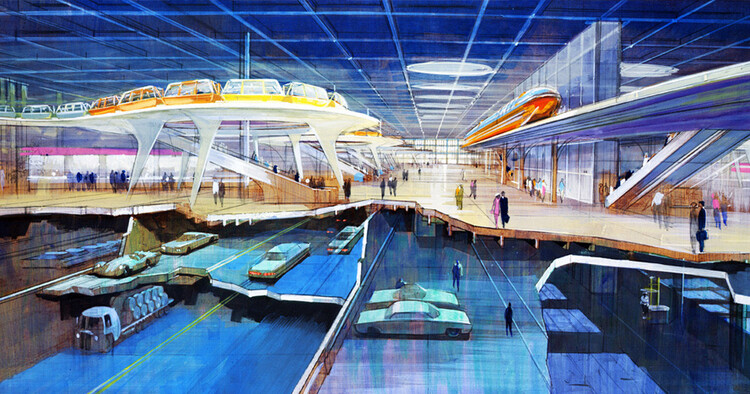
It was going to be the city of tomorrow. Remembering my grandmother’s stories, while sitting on the monorail, in a futuristic city for today’s standards but built in the 1970s, made me wonder what the hell happened. What happened to the city of tomorrow, I asked myself. Why can’t I go anywhere safely without a car?
American cities were originally built for pedestrians, given the fact personal cars weren’t owned by everyone. This meant density was a critical part of designing and building cities. It naturally led to neighborhoods with corner stores, restaurants, bars, and other mixed uses, owned by families who lived upstairs. People went to these places because they were easily accessible. They’d cross paths on the street with their neighbor on the way to work and chat. City streets were designed to make it easy for pedestrians to get from point A to B easily and spend their money along the way. When walking wasn’t practical, you could bike and many cities developed street car systems when walking or biking wasn’t practical.
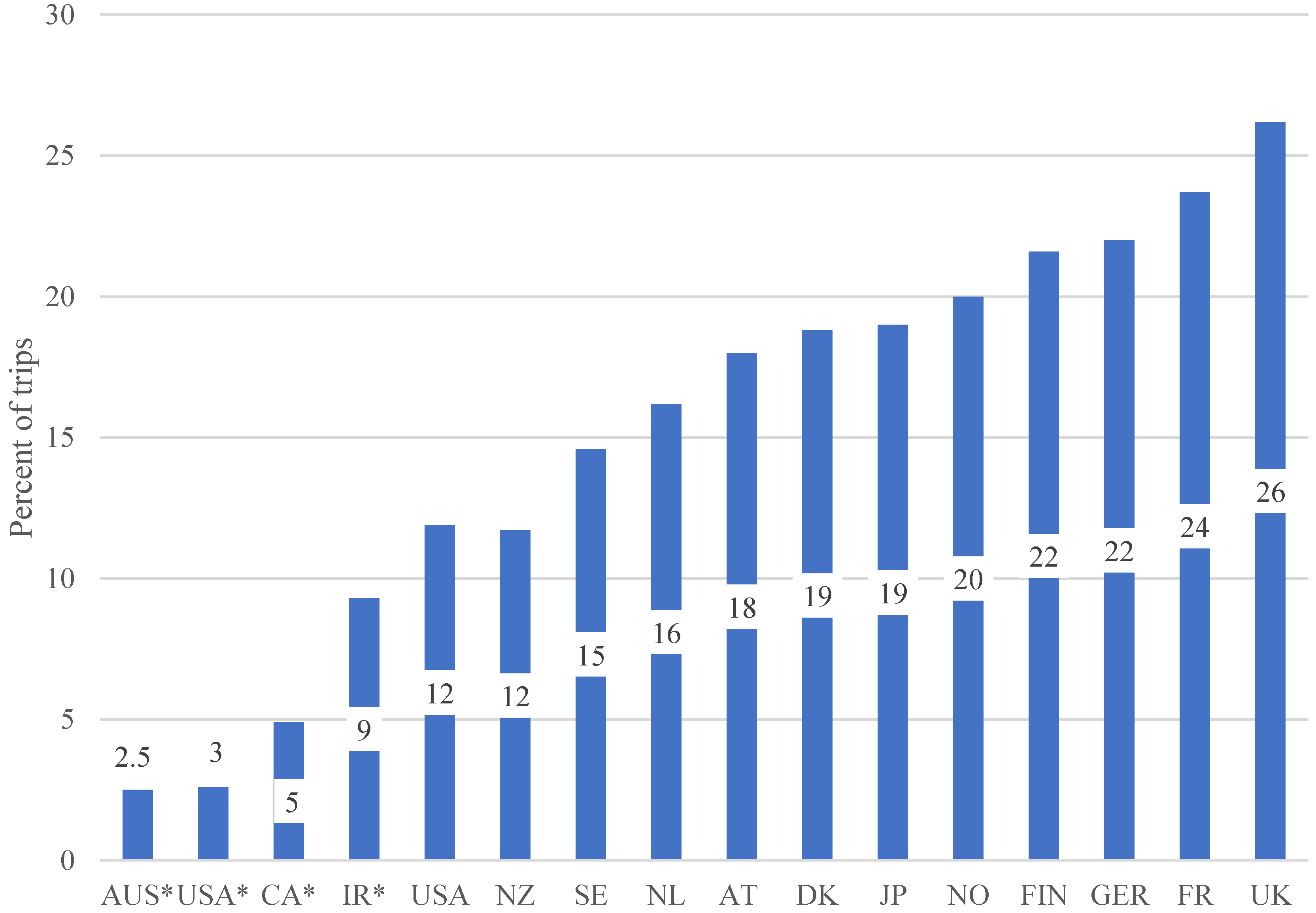
A central assumption of a cities planning was that it was going to be inhabited by people. Even when the automobile came on the scene in the 1920s, many Americans considered the driver to be a tyrant that deprived others of their freedom and rights. Having a requirement for cities and towns to be walkable and dense naturally made them conducive to people having a sense of community. Interactions with all walks of life on the city streets were more common, a rarity today. I’d argue having less of these types of “weak” social interactions can partly be attributed to the the divisions and mental health declines in our country today. A 2014 study showed the importance of weak social ties on our overall happiness. Having walkable cities also meant exercise was built into our daily lives. A gym membership wasn’t a requirement to safely walk. You didn’t need a treadmill or track to exercise, going nowhere. It was just part of daily life. The lower rates Americans walk relative to other countries, attributes to higher rates of obesity and other health risks.
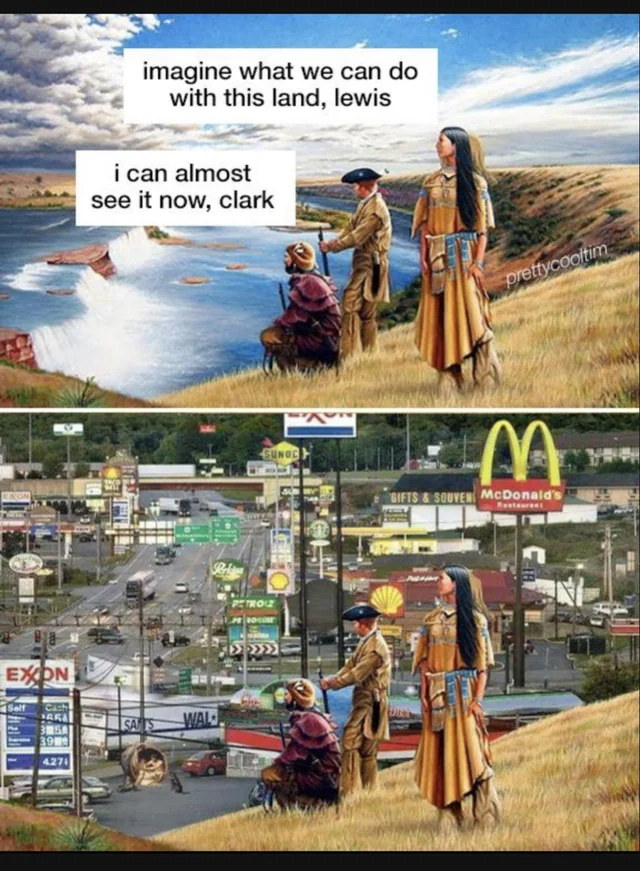
I think most people underestimate how deeply our increasingly man made environment shapes our happiness and wellbeing. How we move within that environment is important. Walt Disney understood this and we were on the path towards his dream city of tomorrow, but as time went on in America we started going down another path. One where the car was going to be at the center. I’d argue having this car centric view of our environment, towns and cities, is a detriment to our society. When we started to demolish our walkable cities and neighborhoods to build our suburbs, highways and interstates that cut through downtowns, we lost some pieces of daily life that made life more enjoyable. We started creating minimum parking laws, requiring each business to take up more land and be less compact. We zoned areas so only single family homes, with lawns, could be built. And by the 1950s, we removed most streetcars in favor of personal cars. Today, in most American cities the only way to get anywhere is with a car, irrespective of distance. Our once walkable cities are now urban sprawls. Source material for memes. Our towns and cities lost a piece of their humanity.
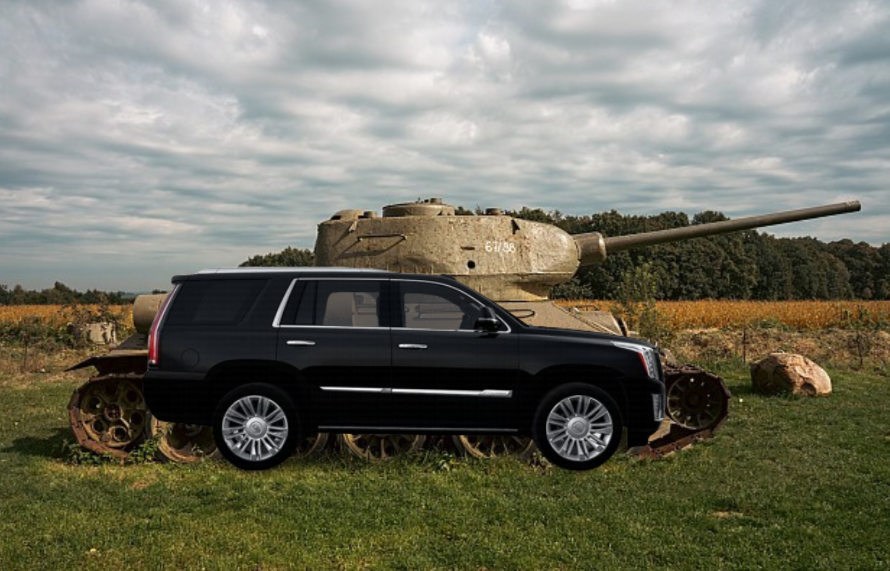
Most pedestrian routes are now dangerous, requiring people to walk on or near roads with fast moving cars. Everything in a modern American city revolves around the car, and cars are ingrained into our culture as much as guns are. It’s a status symbol of one’s wealth and something we’re constantly told we need. Not just a car, but a car that fits your needs and lifestyle. It’s not that cars are evil. They’re amazing pieces of engineering that let us travel great distances easily, but I’d argue in most scenarios a 4x4 truck or an SUV the size of a tank is not the optimal form of transport for most trips we Americans take.
By making them a minimum requirement to participate in modern American society, we also greatly increase the barriers of entry for everyone. It creates a chicken and egg problem: one must have a car to do the things required to survive, like get a job, but to get a job one must have a car. I was lucky like many Americans and my parents got me my first car, but everyone isn’t as fortunate. Owning a car isn’t cheap, either. The current average price of a new car is around $49,000 to $50,000, they have steep depreciation curves, and more than 80% finance these machines today. This is all to say owning a car is a liability. Not an asset. But it’s a requirement we’ve made for everyone. AAA calculated the annual cost of owning a car at $10,728. Thibodaux’s population is 15,405 (where I’m currently located), which puts the collective cost of mobility for Thibodaux roughly at $165,264,840 million. One might think: America needs to be car centric because it’s so big and we travel great distances. Though this has some truth, and some trips do require a car, the data doesn’t support this. The majority of car trips are less than 6 miles.
One could also make the claim that most cities do in fact have some form of public transit (usually a bus system), but the majority are so underfunded they’re unusable, and since they’re unusable no one uses them unless they absolutely have to. So, no one wants to fund them. Another chicken and egg problem. I’d argue that having taxes or other Government revenue streams to fund a good public bus system is more cost effective and ends up being cheaper for citizens versus everyone owning their own car, a liability. American cities end up spending billions on projects to widen or add more roads, which has been proven to not improve traffic. Investment in public transit like buses provide better returns of tax dollars. Sure, most of us would still own cars, but it shouldn’t be a requirement for everyone. It should be a luxury item, not a necessity. We Americans like to always think we’re the best at everything, but when it comes to urban development and public transit, we’re far behind the curve. All you have to do to realize this fact is take a trip to a place like the Netherlands to see for yourself.
Most American’s love visiting european cities because it’s the first time they’ve been somewhere where they don’t need a car to get around. They go on walking tours of Rome, take the Tube in London to see Big Ben (remember to mind the gap), and go biking around all of Amsterdam. To an American, this is all a novel experience that is just normal for europeans. These are places with similar populations as American cities. The cities are just have denser than the modern American city, with transit systems and mixed land use. Just look at a comparison between Atlanta and Barcelona.

Many Americans equate owning a personal car to being free and independent. I disagree. True freedom is having multiple viable ways to move through society. Even though this is our current reality, it doesn’t mean it has to be this way forever. It’s a solvable problem. There’s no law of nature that says modern society requires cars for transport. All we need to do is change the way we think about our towns and cities, demand our local politicians prioritize urban planning, and realize that making everyone own a car to function in society is a misguided view of the world, which negatively impacts our daily lives and quality of life. The city of tomorrow should be a city that, as Walt Disney put it, “caters to the people as a service function.”